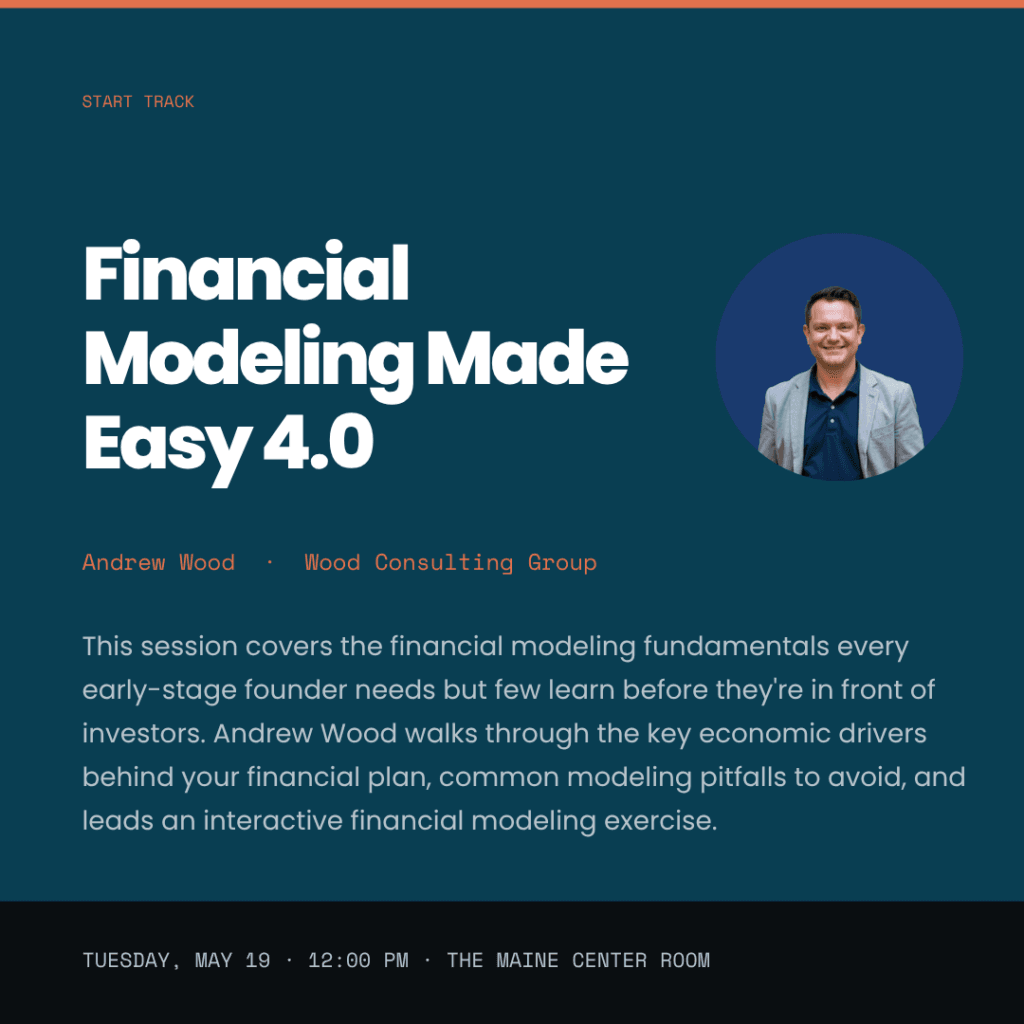
This week I got to do one of my favorite things — stand in front of a room full of founders and demystify financial modeling. I presented “Financial Modeling Made Easy 4.0” at Startup Maine, and the energy in that room was something else.
The session was built around the places where founders typically go wrong on their financial modeling journey. Things like treating the model as the whole fundraising deliverable instead of one piece of the puzzle. Or building in isolation when a model’s real power is creating alignment across a team — getting co-founders, advisors, and early hires looking at the same assumptions and asking the same hard questions together.
We dug into the four economic drivers that every model needs to address, the mental traps that keep founders stuck, and why being aligned on your founder team is critical. The best part? The questions from participants were phenomenal. What was supposed to be a presentation turned into a genuinely collaborative live modeling session. Financial modeling clicks when you’re working through it together, not just watching someone talk about it. So thank you to everyone who jumped in — your questions made it better for the whole room.
As someone who has spent 14 years as a fractional CFO helping early-stage firms build these financial stories, and as a founding board member of Startup Maine, moments like this week remind me why this ecosystem matters. If you’re a founder staring at a blank spreadsheet, don’t stay stuck — that’s what I’m here for.
We were only briefly able to touch on how AI is changing the financial modeling landscape, but it’s a topic I’m deeply invested in. For anyone who wants to explore further, I’ve published an open-source Claude AI skill on GitHub that walks founders through building a complete 60-month, 3-statement financial model through conversation.